Finding Free Campsites on Public Land: A Practical Guide to Dispersed Camping

What Is Dispersed Camping and Where Can You Do It Legally?
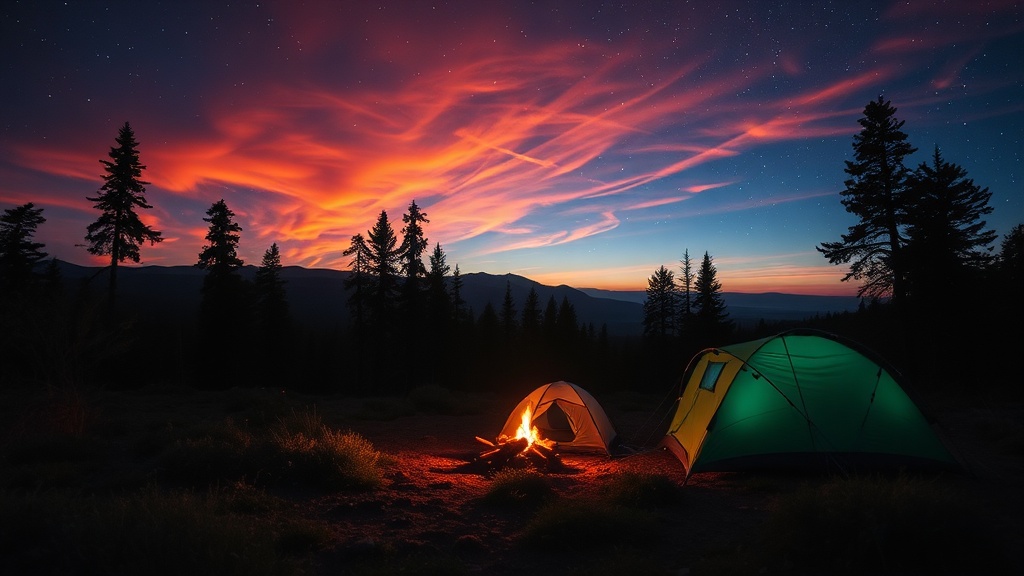
Picture this—you're driving through the Rocky Mountains as the sun dips below the peaks, casting long shadows across valleys untouched by RV parks or KOA signs. Your tank's half full, your fridge is stocked, and you'd rather not pay $65 for a cramped spot with full hookups you don't need. This is where dispersed camping changes everything—parking your RV on public land for free (or nearly free), surrounded by nothing but pine trees and open sky.
Dispersed camping—also called boondocking, primitive camping, or wild camping—means setting up outside designated campgrounds on federally managed land. In the United States, this primarily happens on Bureau of Land Management (BLM) territory, National Forest land, and some National Grasslands. Each agency has slightly different rules, but the core principle stays consistent: camp away from developed areas, leave no trace, and stay within specific distance requirements from roads and water sources.
The legal boundaries matter—camping isn't permitted everywhere on public land. Most agencies require you to stay at least 200 feet from water sources like lakes, rivers, and streams to protect riparian habitats. You'll also need to park a certain distance from paved roads (usually 100 feet or more, depending on the specific district). The standard stay limit runs 14 days within any 28-day period, though some high-use areas restrict you to just a few nights. Exceed these limits, and rangers can—and do—issue citations.
"Dispersed camping represents the purest form of RV travel—self-sufficient, remote, and deeply connected to the landscape you're passing through." — Bureau of Land Management
How Do You Actually Find These Free Camping Spots?
Finding dispersed campsites requires a different mindset than booking through Recreation.gov or Campendium's established listings. You're looking for pullouts, forest service roads, and designated dispersed camping areas that aren't marked with signs or reservation systems. Start with the Motor Vehicle Use Maps (MVUMs)—free maps published by the U.S. Forest Service that show exactly which roads are open to motor vehicles and where dispersed camping is permitted. These maps distinguish between paved highways, maintained gravel roads, and 4WD tracks, helping you assess whether your rig can handle the approach.
Satellite imagery becomes your best friend here. Before heading out, spend time on Google Earth or Google Maps in satellite view, scanning forest service roads for clearings that look large enough to accommodate an RV. Look for flat-ish areas, existing fire rings (a telltale sign of established campsites), and evidence of previous vehicle traffic. Pay attention to elevation changes and road conditions—what looks like a gentle slope on satellite might be a rutted nightmare in person.
Several apps and websites aggregate dispersed camping locations from user reports. Campendium, iOverlander, and FreeRoam offer crowdsourced databases with photos, GPS coordinates, and recent condition reports. These prove invaluable—someone with a 45-foot fifth wheel might confirm that a Forest Road 123 spur accommodates big rigs, while another user warns about low-hanging branches or washed-out sections. Cross-reference multiple sources when possible, and always check the date on reviews; forest roads deteriorate quickly after heavy rains or snowmelt.
Local ranger stations provide the most current information. Call ahead during business hours and ask specifically about road conditions, fire restrictions, and recent closures. Rangers can point you toward lesser-known areas that don't appear in apps—spots locals have used for decades without advertising online. Bring a paper MVUM with you; cell service disappears quickly on forest roads, and you don't want to rely on digital maps when you're twenty miles from the nearest signal.
What Gear and Preparations Make Dispersed Camping Actually Work?
Dispersed camping means zero amenities—no dump stations, no potable water, no trash pickup, no electric hookups. Your rig needs to be self-contained for the duration of your stay, plus enough reserve capacity to reach the next services. Start with water: most experienced boondockers carry 50-100 gallons for extended stays, plus portable containers for backup. Calculate your usage realistically—showers consume 2-5 gallons each, dishwashing takes 1-3 gallons, and drinking/cooking adds up fast. Navy showers (wet down, soap up, rinse quickly) become standard procedure.
Battery capacity determines your comfort level. Without shore power, you're running on house batteries charged by your engine's alternator, solar panels, or a generator. Lithium batteries provide the best power-to-weight ratio, though quality AGM or gel batteries work fine for shorter trips. Solar panels—whether roof-mounted or portable—extend your off-grid time dramatically; a 200-watt system can keep up with moderate usage on sunny days. If you run a generator, know the quiet hours (usually 10 PM to 6 AM) and etiquette—nobody wants to hear your Honda EU220i humming at midnight when they came out here for silence.
Waste management requires planning. Gray water disposal gets tricky—technically illegal to dump on the ground, though some old-school campers still do it in remote areas (don't be that person). Pack out all trash, including food scraps that attract wildlife. For black water, you'll need to locate dump stations before or after your dispersed stay—many truck stops, some rest areas, and established campgrounds offer dump services for $10-20. Apps like SaniDumps maintain databases of public and private dump stations nationwide.
Navigation tools extend beyond GPS. Download offline maps through apps like Gaia GPS or Avenza Maps before leaving service areas. Carry physical maps and a compass as backup. Know how to read topographic lines—what looks drivable on a flat map might be a steep grade that strains your engine and transmission. Always inform someone of your planned location and expected return, especially when venturing into truly remote areas where rescue could take days.
How Do You Handle Safety and Emergencies Without Campground Support?
The remoteness that makes dispersed camping appealing also creates risks. Medical emergencies become serious when you're an hour from paved roads and cell service is nonexistent. Build a comprehensive first aid kit beyond the basic drugstore version—include trauma supplies, prescription medications, and reference materials. Consider a satellite communicator like Garmin inReach or Spot devices; these allow two-way texting and emergency SOS signaling anywhere with sky visibility, running about $15-50 monthly depending on service levels.
Weather preparedness matters more without shelter nearby. Thunderstorms roll through mountain valleys quickly, and flash floods transform dry washes into raging torrents. Check forecasts before committing to low-lying areas, and identify escape routes if water starts rising. Lightning safety—stay inside your metal RV during storms, avoiding contact with metal surfaces, and never shelter under isolated trees.
Wildlife encounters require proper food storage. In bear country, use bear canisters or hang food bags at least 10 feet off the ground and 4 feet from tree trunks. Never store scented items—toothpaste, sunscreen, garbage—in your tent or soft-sided pop-up. In areas without bears, rodents still pose problems; they've chewed through wiring in countless RVs when attracted by crumbs or stored food. Keep a clean camp, wipe surfaces, and secure everything in hard-sided containers overnight.
Fire safety carries legal and environmental weight. Check current fire restrictions before lighting anything—during dry seasons, even camp stoves get banned in some districts. If fires are permitted, use existing fire rings rather than creating new ones. Keep water and shovel nearby, and ensure fires are dead out before sleeping or leaving (drown, stir, drown again until you can handle the ashes). Wildfire risk in the American West has made this non-negotiable; a single spark can destroy thousands of acres and kill people.
Why Do Experienced RVers Keep Coming Back to Dispersed Camping?
Despite the complications—the planning, the self-sufficiency, the occasional flat tire on rough roads—dispersed camping offers something developed campgrounds can't replicate. It's the silence so profound you hear your own heartbeat. It's watching the Milky Way emerge without competing with security lights. It's waking up to elk grazing fifty yards from your window, or hearing coyotes sing at dusk without RV generators drowning them out.
The financial benefit helps too. At $0-20 per night versus $40-80 for established campgrounds, extended travel becomes sustainable. Full-time RVers save thousands annually by mixing dispersed stays with occasional paid nights for laundry, long showers, and tank dumps. The strategy—known as "chasing 14-day limits"—involves rotating between dispersed areas, staying maximum time at each, then moving to the next spot.
There's also a skill-building satisfaction that comes with self-sufficiency. Managing your resources, reading the land, and solving problems without calling a campground host develops competence that translates to other areas of life. You learn your rig's systems intimately—where the weak points are, how much power you actually need, which roads your tires can handle. This knowledge proves invaluable when mechanical issues arise far from services.
The dispersed camping community operates differently than campground socializing. Without assigned sites or shared amenities, interactions happen organically—trading road condition reports at trailheads, comparing solar setups, sharing coordinates for exceptional spots. There's an unspoken code: don't crowd others (maintain visual separation when possible), respect quiet hours strictly, and leave campsites cleaner than you found them. Violate these norms, and the community remembers—good spots get shared selectively.
If you've never tried dispersed camping, start conservatively. Pick a well-documented area within an hour of services, arrive during daylight, and stay just a night or two while you assess your systems. Build experience gradually—tackle rougher roads and longer stays as your confidence grows. The learning curve exists, but thousands of RVers prove it's surmountable. The reward—true solitude, spectacular settings, and the satisfaction of genuine self-reliance—justifies every bit of preparation.