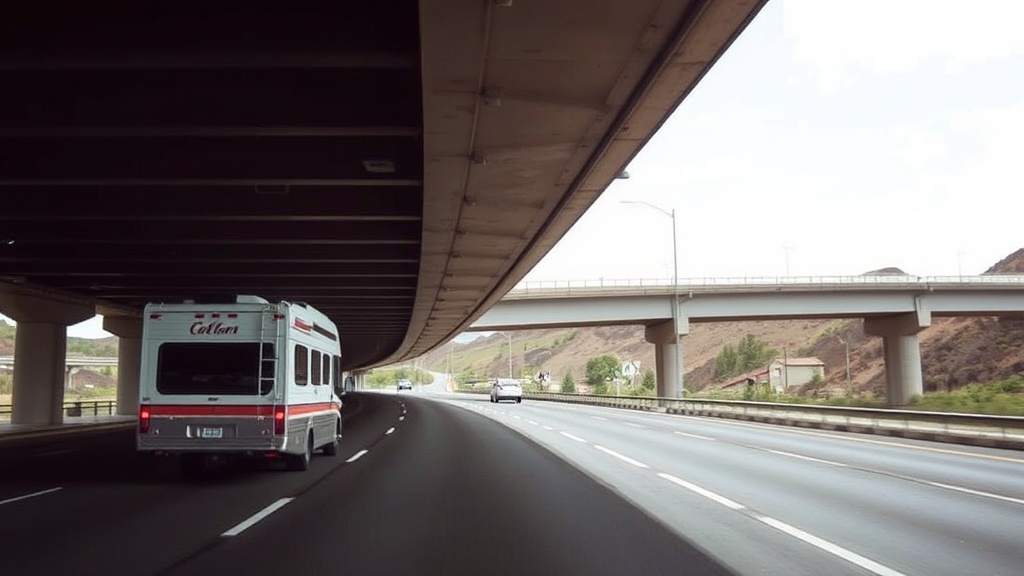
Always Check Bridge Clearances Before Your RV Road Trip

Quick Tip
Always verify bridge and tunnel clearances along your route using an RV-specific GPS app before departure.
This post covers how to verify bridge clearances before hitting the road in an RV — and why skipping this step can lead to costly damage, route delays, or worse. Knowing the exact height of the rig and the clearance of every bridge along the route isn't just smart planning. It's the difference between a smooth trip and a very expensive mistake.
What happens if an RV hits a low bridge?
The damage is immediate and expensive. A low bridge strike can peel back the roof of a motorhome, destroy air conditioning units, and rip off satellite dishes in seconds. In 2019, a rental RV hit the famous 11-foot-8 bridge in Durham, North Carolina — the collision tore the roof clean off and shut down traffic for hours. Insurance may cover some repairs, but deductibles run high. Worse yet, some policies exclude damage caused by operator error. You're left with a mangled rig, a ruined trip, and potential liability for road damage.
How do you find bridge clearance data for your route?
Start with the exact height of the RV — and yes, that means measuring it loaded. Don't rely on the manufacturer's sticker alone. Add six inches to account for air conditioners, antennas, and any roof racks. Once you know that number, use specialized RV routing tools rather than standard GPS apps.
Several resources compile verified clearance data:
- State DOT websites — most post clearance maps for major highways and parkways.
- LowClearances.com — a paid database mapping thousands of low bridges across the U.S. and Canada.
- Truckers' atlases — the Rand McNally Motor Carriers' Road Atlas marks restricted routes and clearances.
What tools help RV drivers avoid low bridges?
Dedicated RV GPS units and trip-planning apps are the best defense against a bad route. Unlike smartphone maps, these tools let you enter the RV's exact height, length, and weight — then filter out roads that don't fit.
| Tool | Best For | Key Feature |
|---|---|---|
| RV Trip Wizard | Pre-trip planning | Integrates with campground reviews and bridge clearance data |
| Garmin RV 890 GPS | In-cab navigation | Voice-activated routing with custom RV profiles |
| Rand McNally OverDryve 7 RV | Offline reliability | Built-in dash cam and truck-specific road atlas |
That said, no tool is perfect. GPS databases lag behind real-world construction, and temporary detours can send you onto roads you didn't plan for. Here's the thing: always confirm the route with up-to-date state DOT resources before you leave. Worth noting — the Federal Motor Carrier Safety Administration and the Federal Highway Administration both maintain resources on commercial vehicle restrictions that RVers can use to verify clearances independently rather than trusting a single app.
Bridge clearances aren't glamorous. They don't make for great campfire stories. But checking them — every single trip — keeps the roof intact, the schedule on track, and the path stress-free.